publishing
Archived Posts from this Category
Posted by ruth on 04 Feb 2012 | Tagged as: COETAIL, publishing
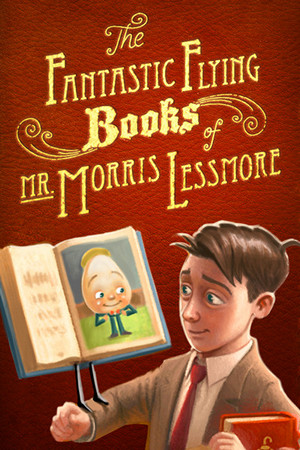
Using iBooks Author, students can create their own storybooks, illustrated with original artwork, downloadable from a website.
Stories written in iBooks can also be exported and displayed as a PDF file. This format is easy to send and view in all computer systems.
Posted by ruth on 13 Dec 2011 | Tagged as: COETAIL, publishing, teaching
“Personal branding, by definition, is the process by which we market ourselves to others.” This is the essence of an article by Dan Schawbel called, “Personal Branding 101; How to Discover and Create Your Brand.” What is my brand and what do I stand for? My current job is librarian, but my brand may have more to do with writing for children.
Do I even need a brand? While one may question the need for self-marketing, if one tumbles into the adventure of looking for a new job, the value of having a personal brand may suddenly become apparent. An individual may already have a personal brand of sorts, in fact, and not even know it.
This topic interests me, not because I am currently searching for a new job, but because I am launching into the world of digital publishing and realize that, as an author, I am responsible for the promotion and branding of my books. If I want to sell books and reach an expanding readership, I have to build my brand. So far, my children’s sermon website, Kidsermons.com, does have links to purchase my books, but it exists mostly to give pastors a free resource for their time with the children on Sunday morning. The digital book I am currently working on, however, has no connection to the children’s sermon site and I realize that I will have to create another online presence that can highlight a new category of illustrated children’s books. I have a lot of work to do.
One shouldn’t wait to start building a personal brand until there is a desperate need, of course; it should be a process that sculpts itself over time. As soon as a person begins posting content online, in fact, a personal brand is already being developed. In talking with others about our digital footprints, I have often said that the internet makes it hard for someone to lead an anything-but-transparent life. Even previously posted blogs, websites and photos that have been purposefully removed can be looked up again through sites like the Internet Archive. Your digital footprint is pretty much permanent. As Dan says in his article, “transparency and authenticity are the only means to survive and thrive in this new digital kingdom,” so be careful where you step.
Even if you are building on an old “brand you,” there are many things you can do to help your image, as long as everything that you post is true and truly you. If your Facebook page has good, positive content, then that is a good start to “Brand You.” (Students should be reminded of the visibility and permanence of Facebook material before they enter high school as colleges can search these sites as part of their acceptance decisions.) But beyond Facebook, it is even more important to have a personal webpage or blog. While I have and maintain both, I realize that they do need a lot more work.
When I do a search of my name, Ruth Ingulsrud, on the web, I find 86,700 results. The first result to pop up references my wonderful sister-in-law, whose maiden name was Ruth Ingulsrud, and who is now the Chancellor of Kwansei Gakuin and goes by the name of Ruth Grubel. Most of the other references were mine, but I saw one important reference that was sorely out-of-date. I realized that I need to update my online resumé. To help with this process, I can use the helpful information found on another of Dan Schawbel’s pages on building the “Ultimate Social Media Resumé.” I don’t know if I will end up with the “ultimate” but I hope it will be better than what I currently have. I can do so much more now with the ability to embed video and photos and to include links to social networks and forums, blogs and wikis. I’m realizing that a personal brand does not create a brand-new you, but it can show your strengths and gifts in a brand-new way.
Posted by ruth on 04 Dec 2011 | Tagged as: COETAIL, publishing, teaching
“Inanimate Alice represents a paradigm shift in how we approach reading and writing instruction,” states an article posted on the National Writing Project website. I’m reading this piece that reviews and promotes a book it touts as “the leading example of this transmedia phenomenon is the born-digital story.” Really? Haven’t they ever heard of hypercard? Wow; maybe I’m just too old to be reading this article. Twenty-some years ago, I remember purchasing and playing with quite a few interactive stories with my three-year old son. He loved them. He could make different things happen in the stories by clicking on various choices. There were several options on many of the pages and the story had a variety of endings.
The stories used a very neat piece of software called “Hypercard” which was pretty simple but worked quickly and worked well. Amanda’s Stories was one of the early examples. The stories were simple, creative and interactive. Manhole was a more sophisticated later example. The brothers who designed Manhole went on to create Myst, a virtual, explorable world with countless adventure permutations. These are just a few early examples of transmedia storytelling which invite (and actually require) reader participation. Hypercard was simple enough for my four year old computer-loving son to make an interactive story of his own with some help from techie-hubby.
Here is one area where computers are encouraging more brain activity instead of passive consumption. This is encouraging. In the school library where I work, many students come after school to use the computers to access games. They tend to gravitate towards the less mentally-demanding games that involve shooting some sort of missile, balls or birds or what-have-you, at a moving target. Although I have explained to them again and again that the only games they are allowed to play in the library are educational ones, they still try to justify their choice by explaining that they have to aim correctly to shoot the object. “And is your brain working hard? Are you having to think to figure things out and solve problems?” I ask. “Not really,” they usually admit, and then they find a more challenging game that involves logic or physics puzzles like Civiballs, or teaches typing skills like Super Hyper Spider Typer, or encourages them to practice math problems like IXL Math.
I have started to set up links that they can easily access through the CAJ library site that takes them directly to games which exercise their brains. The typing links are up, but I have more to do in this area. It would be fun to set up some interactive computer stories accessible through the library website as well. In the past, students have requested “Choose Your Own Adventure” type stories, but we only have a few of these in the library. In paper form, they are a bit cumbersome and awkward to read, but the digital platform is perfect for this sort of thing. I expect to see more of these books with embedded, applicable links becoming available in the future, and would hope that many new offerings would become available that challenge readers to exercise many different skills and areas of learning: physics, biology, math, literature, history, etc. In order to bring the story to a satisfying conclusion, for example, the reader would have to solve problems or figure out the optimal storyline choice. Interactive stories and texts that exercise the brain and teach curriculum would be a welcome addition to our school library and textbook resources.
Update:
Here are a few resources that I was guided to after posting this article … (thank you Lorraine Hopping Eagan) :
Interactive MathStory-Game: http://www.kosjourney.com/
Blog about Transmedia: http://www.transmediakids.com/
Robot Heart Stories project: http://www.indiegogo.com/Robot-Heart-Stories
Laura Fleming’s Blog: http://edtechinsight.blogspot.com/
Posted by ruth on 12 Jul 2011 | Tagged as: publishing
I must be crazy. What do I think I’m doing? I’m going about this the wrong way. If I say it to myself before I hear it from someone else, perhaps it won’t be so discouraging and perhaps I won’t give up. I am attempting to publish my first illustrated children’s book. I have chosen my own illustrator, procured my own ISBN number, and will be my own publisher. And yes, I do know all of the arguments against this kind of folly.
Here’s the way it is supposed to be done: You write your stories, get editing advice from fellow writers and friends (some of whom remain friends), submit countless query letters (after researching which publishers might deign to even glance at your letter), submit manuscripts (being thankful that at least some publishers accept digital submissions), and then wait next to the mailbox (physical or virtual) with a big box of kleenex for the rejection notices to come rolling in. Then, when not one of your beautiful stories is
published, you latch onto an agent who is motivated to sell your stuff since they will get a share of the profits. The agent finally convinces a publisher to give you a chance and you are launched into the world of officially sanctioned and published writing.
The publisher writes up your contract, decides what percentage (if any) of the book sales that you will receive, chooses an illustrator (whose work you may or may not like), dictates changes to the text of the book and tells you what the title will be. Publishers are, of course, helpful in many respects and they do earn their keep in countless ways: designing the book layout, creating an eye-catching cover, telling you clearly when your writing sucks, keeping track of income and taxes by providing you with year-end statements… and most importantly of all…. Promoting The Book.
Those publishers know all the angles: the bookworm magazines and literary organizations, the librarian blogs and rags, the trade shows, the bookstore promos, the schmoozing and oozing. I know I’ve left lots out because I haven’t traveled there and I don’t have a map. I’m just publishing a book because I like the story, I love the illustrator and I think that children will enjoy the result.
That said, I am still scared spitless. (Why is my spell-checker underlining the word, “spitless?” Isn’t that a word? It’s reality anyways.)
So, I am doing the dive; a self-published digital book optimized for the iPad, available by Christmas of 2011. My feet have left the platform and I am free-falling. It is exhilarating as the wind rushes past my face… but eventually I will contact the surface of the deadline, go deep, and hopefully eventually come up for air. It’s too late to haul me back to the diving platform and counsel me to take it to a legitimate publisher, but it’s not too late to pray.